
9 High-Quality Small-Caps Warren Buffett Would Buy If He Could
Too small for Berkshire. Not too small for you. Nine businesses Buffett would love if the math worked.
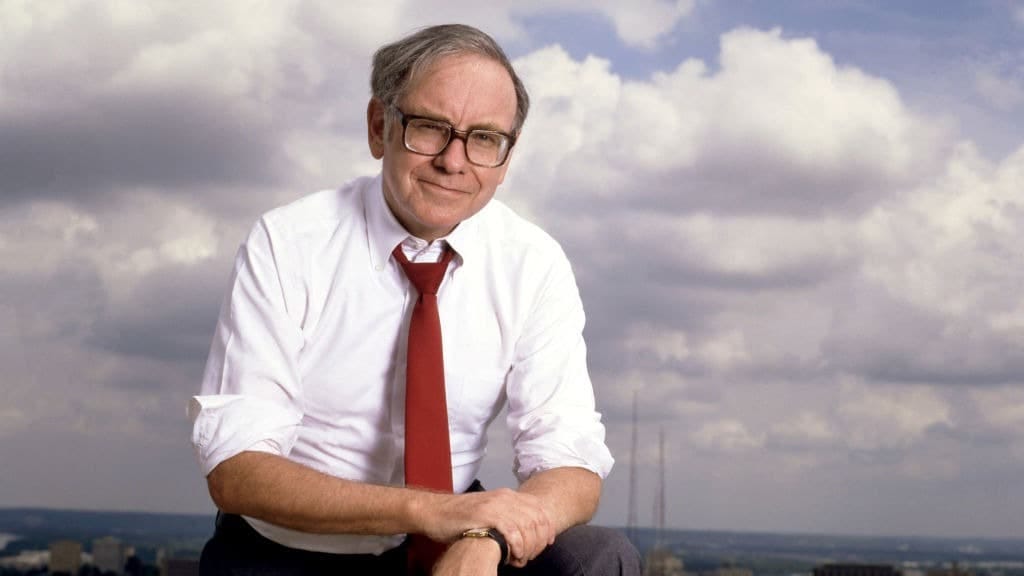
Warren Buffett has said it himself, repeatedly and with genuine frustration:
The size of Berkshire Hathaway is its biggest enemy.
Moving billions into a position requires a business large enough to absorb it without moving the market. Most of the most interesting opportunities in equities are categorically off the table. He has called this the curse of success.
That curse is your edge.
The nine businesses on this list are too small for Berkshire to own meaningfully. But each of them shares something with the businesses Buffett has spent his career pursuing: a durable competitive position, a business model that is simple enough to understand deeply, economics that reward the owner rather than the empire-builder, and management teams that think in years rather than quarters.
Buffett’s principles, applied at the scale you can actually act on.
Disclaimer: This article is for informational and educational purposes only and does not constitute financial advice, investment recommendations, or a solicitation to buy or sell any securities. The views expressed are solely those of the author based on publicly available information. All investments carry risk, including the potential loss of capital. Past performance is not indicative of future results. Always conduct your own due diligence and consult a qualified financial advisor before making any investment decisions. The author may hold positions in securities mentioned.
You can read my full disclaimer here.
9. Anterix ($ATEX)
Anterix is the most speculative entry on this list and the one that least fits the Buffett template, which is why it sits at the ‘bottom’. Buffett famously avoids businesses where the outcome depends primarily on future events going right rather than the present value being obvious. Anterix is a future-events story.
The business owns licensed spectrum in the 900 MHz band with coverage throughout the United States, and its entire thesis is that US utilities will deploy private broadband networks on that spectrum to modernize their grid infrastructure. The opportunity is real. The Federal Communications Commission unanimously approved expanding the broadband allocation from 6 MHz to 10 MHz in February 2026, effectively doubling available capacity. The contracted proceeds pipeline stands at approximately $123 million with visibility to $80 million or more in the current fiscal year. The $3 billion pipeline across more than 60 potential utility customers is not fictional.
The catch is that Anterix generates almost no revenue in the traditional sense. It earns through spectrum license sales as contracts are executed. Cash on the balance sheet is approximately $30 million with no debt, which is a thin runway if the contract conversion cycle slows. A strategic review process initiated in early 2025 after receiving inbound acquisition interest remains ongoing, adding both optionality and uncertainty.
What makes it worth mentioning in Buffett’s framework is the asset quality of the spectrum itself. Licensed spectrum in a specific frequency band, with national coverage, issued by a federal regulator, and used by utilities that need reliable dedicated infrastructure, is a genuinely scarce asset. Spectrum does not depreciate. It cannot be replicated. Once sold, the relationships compound. If the utility adoption cycle accelerates, the contracted pipeline converts, and Anterix executes its commercial rollout, this is a business with embedded value that the current stock price does not obviously reflect.
It belongs at the bottom of this list because the if is doing a lot of work. Buffett would want the earnings. Anterix does not yet have them.
8. Paxman AB ($PAX)
Paxman makes scalp cooling systems used in cancer treatment to reduce chemotherapy-induced hair loss. The system works by cooling the scalp during infusion, reducing blood flow to hair follicles, and limiting the amount of chemotherapy that reaches them. It has been validated in clinical studies, including the first randomized multicentre trial in the US, approved by regulators in multiple countries, and is now used in more than 65 countries across approximately 5,000 installed systems. For patients undergoing chemotherapy, hair loss is one of the most visible and psychologically distressing side effects of treatment. Paxman is the company most directly positioned to address it.
The investment case has always rested on US reimbursement. Without insurance coverage, scalp cooling requires out-of-pocket payment from patients who are already under financial stress from cancer treatment costs. The Category I CPT codes issued by the American Medical Association, effective January 2026, are the most important development in Paxman’s history. CPT Category I codes establish a standardized billing pathway for insurance reimbursement. They do not guarantee payment, but they create the framework through which hospitals can bill insurers and begin building reimbursement history that ultimately leads to consistent coverage.
Full year 2025 revenue was SEK 323.6 million, up 23% year-over-year. The business reported a net loss of SEK 16.7 million for the year, reverting from a small profit in 2024, largely due to integration costs from the Dignitana acquisition and investment in US commercial infrastructure. Revenue is forecast to grow approximately 26% annually over the next three years, above the medical equipment industry average.
The Dignitana acquisition eliminated the company’s primary direct competitor and added distribution relationships across European and Australian markets
A second product, the cryocompression system for chemotherapy-induced peripheral neuropathy, received three new CPT Category III codes effective January 2027, opening a pathway to commercialization of a second clinical problem affecting a large proportion of chemotherapy patients
New headquarters and production facility in Huddersfield, opening by the end of 2026, will improve manufacturing capacity and logistics for the next growth phase
Market cap of approximately $117 million against a scalp cooling market expected to grow at approximately 11% annually to $3.2 billion by 2033
Buffett would admire the niche clarity and the clinical moat. He would be uncomfortable with the lack of profitability and the dependence on reimbursement. The ranking at eight reflects genuine promise sitting behind execution risk that has not yet been fully resolved.
7. MedCap AB ($MCAP)
MedCap is the most unusual business on this list in structure and one of the closest in philosophy to how Buffett actually operates.
The company acquires and develops profitable, market-leading niche companies in the life science industry across Northern Europe. It buys small, cash-generative healthcare businesses in three segments, Assistive Tech, MedTech, and Specialty Pharma, holds them long-term, supports their growth through capital and operating expertise, and compounds the portfolio over time. The businesses in the portfolio are not listed. MedCap is the listed vehicle through which investors access them.
This is Berkshire at SEK scale, with a healthcare focus and a Nordic geography.
Full year 2025 revenue was SEK 2.11 billion, up 16.6% year-over-year. EBITA grew 26% for the full year and 68% in Q4 2025 alone, reflecting strong organic performance and the contribution of recently acquired businesses, including Dan-rehab, acquired in January 2025. The Specialty Pharma arm, through Unimedic Pharma, completed the acquisition of XGX Pharma in mid-2025, adding another niche pharmaceutical product to the portfolio.
Active ownership model: MedCap does not just hold positions; it installs leadership, defines strategy, and operates with the philosophy that each subsidiary should be the best in its niche
Revenue and EBITA have compounded consistently over multiple years without the dilutive capital raises that characterize most small healthcare companies
Three segments provide diversification across different healthcare end markets while maintaining focus within life sciences
Northern European geography creates both an informational edge for investors outside that market and a structural barrier to competition from global acquirers who overlook smaller Nordic targets
The business is almost entirely ignored by non-Scandinavian institutional investors, creating the kind of pricing inefficiency that Buffett built his career on identifying
The structural question for any acquirer-model business is whether the pipeline of acquisition opportunities remains rich and whether management can deploy capital at returns that justify the reinvestment. MedCap’s track record suggests yes on both. The ranking at seven reflects the indirect nature of the investment; you are buying the quality of capital allocation rather than a direct business, and the limited English-language coverage that makes independent verification harder than for the US and Australian names on this list.
6. BuySell Technologies ($7685)
BuySell Technologies is a Japanese recommerce business, and if you dismiss it based on that description alone, you are doing exactly what creates opportunities in markets with limited English-language coverage.
The business purchases secondhand luxury goods, kimonos, branded items, watches, bags, stamps, and collectibles directly from consumers through home-visit purchasing teams and retail stores, then resells them through its own e-commerce platform, physical stores, and a BtoB antique auction platform. It is asset-light, data-driven, and operating in a market that combines strong secular tailwinds with almost no international competition.
Japan has a cultural affinity for quality goods and a behavioral resistance to waste. The country has an enormous stock of high-quality secondhand items sitting in households that have not yet found their way to resale channels. An aging population with accumulated assets and a growing awareness of both sustainability and liquidity is accelerating supply onto the platform. BuySell’s technology layer handles appraisal, pricing, logistics, and customer relationship management in ways that traditional pawnbrokers and antique dealers cannot match.
Full year 2024 revenue reached approximately ¥1 trillion yen, up 67.8% year-over-year. Operating income grew 91.1% with the operating margin expanding to 9% from 7.9%. The company executed two consecutive 2-for-1 stock splits in 2025, reflecting both share price appreciation and management’s desire to broaden the shareholder base. Full year 2026 guidance calls for revenue growth of approximately 29%, with operating profit growth of approximately 38%. In February 2026 alone, the store purchase business recorded purchase amounts of 209% year-over-year.
Gross margin of 53% on a recommerce model reflects the quality of the appraisal and pricing intelligence that the platform has developed
The acquisition of DelightZ in April 2026 extends the platform into a complementary recommerce category, consistent with an M&A strategy focused on density and category expansion
The home-visit purchasing model creates a customer acquisition channel that builds loyalty and repeat engagement in a way that online-only competitors cannot replicate
LTV-focused business model evolution, explicitly described in management’s growth strategy, aligns with Buffett’s emphasis on businesses that deepen their relationship with customers over time
The reason it sits at six rather than higher is simple: concentration in Japan creates currency and market access risk for non-Japanese investors, and the cultural specificity of the category makes the competitive dynamics harder to assess from the outside than for businesses operating in more familiar geographies.
5. Lovisa Holdings ($LOV)
Lovisa sells fashion jewelry at low price points through small-format retail stores in high-foot-traffic locations. The product is trendy, the stores are small and efficient, the inventory turns quickly, and the rollout model is one of the most disciplined in global specialty retail.
What makes Lovisa interesting from a Buffett perspective is not the jewelry. It is the economics of the store rollout model. Each new Lovisa store requires low capital investment, generates revenue quickly, and operates at gross margins of approximately 82%. The infrastructure to support a thousand stores is not dramatically more expensive than the infrastructure to support five hundred. That operating leverage is the engine of the thesis.
FY2025 revenue was A$798 million, up 14.2% year-over-year, with 1,031 stores across 45 countries. H1 FY2026 revenue came in at A$500.7 million, up 23% year-over-year, demonstrating a meaningful acceleration from the full-year pace. The company opened 162 new stores in FY2025 and is accelerating that pace in FY2026. Claire’s, the primary US competitor, filed for Chapter 11 bankruptcy protection in 2025, vacating shelf space and customer relationships that Lovisa is actively targeting.
82% gross margin on a physical retail business is genuinely unusual and reflects both the low cost of fashion jewelry and the pricing discipline of a brand that operates at impulse price points
The small store format means each location requires minimal capital, fits a wide range of retail environments, and can be opened or closed with far less economic consequence than larger format retailers
International expansion across Europe and the Americas is still in the early innings. The US in particular remains underpenetrated relative to the brand’s potential, and the Claire’s vacancy creates a specific near-term opening.
The franchise model in select markets extends geographic reach without proportional capital deployment
The honest risk is that fashion is inherently trend-dependent and that the margin compression visible in H1 FY2026, where net income grew only 2.6% despite 23% revenue growth, reflects ongoing investment costs that need to convert into earnings leverage as the store base matures. The ranking at five reflects a business with genuine rollout quality sitting inside a category that requires ongoing judgment about product relevance.
4. Eton Pharmaceuticals ($ETON)
Eton Pharmaceuticals doubled revenue in 2025. Then, guidance was raised for 2026. Then raised it again.
Full year 2025 revenue was $80 million, up 105% from $39 million in 2024. Q1 2026 product sales were $24.3 million, up 73% year-over-year. Full-year 2026 guidance has been raised twice and now exceeds $120 million. Adjusted EBITDA margin is expected to exceed 30%. The company has no debt and is funding its growth entirely from operating cash flow and product acquisition proceeds.
Eton focuses exclusively on rare diseases, a category that Buffett would understand immediately. Rare disease drugs serve small patient populations with no alternative treatments. The pricing power is substantial because the addressable market is defined by medical need rather than consumer preference. Regulatory exclusivity periods are long. Competition is structurally limited because the economics of developing a drug for a few thousand patients globally are unattractive to large pharmaceutical companies. The orphan drug designation framework provides additional protections.
The product portfolio now includes INCRELEX for growth failure, ALKINDI SPRINKLE for adrenal insufficiency, KHINDIVI for pediatric cortisol replacement, GALZIN for Wilson disease, DESMODA for central diabetes insipidus, and HEMANGEOL for infantile haemangioma. Each product serves a defined population of patients with rare diseases, with limited competition. The commercial infrastructure built to serve one product serves all of them, making each new product addition highly capital-efficient.
Revenue more than doubled in 2025, is on track to grow approximately 50% in 2026, and the product pipeline contains additional approvals expected by mid-year
The Eton Cares patient support program, which includes zero copay for commercially insured patients, drives patient initiation and reduces the friction that often limits rare disease drug uptake
Three separate commercial call points across pediatric endocrinology, metabolic disease, and pediatric dermatology allow the sales team to cross-sell the growing portfolio efficiently
Adjusted EBITDA margin above 30% at current revenue levels improves materially as fixed commercial infrastructure costs are spread across a larger portfolio, creating inherent operating leverage
The ranking at four rather than higher reflects the pipeline dependency inherent in pharmaceutical businesses. Eton is executing exceptionally well on a clearly defined strategy. The risk is that rare disease positioning still requires regulatory approval, reimbursement negotiation, and physician adoption at each new product launch, each of which introduces execution variability that product or manufacturing businesses do not face.
The first six are solid. The final three are the ones I’d put my own money into first.
Highest conviction. Best economics. Most overlooked by the market.
That’s what’s waiting for you. Not for long, though.
→ Join Fluent Few Premium — €25/month or €275/year
First 14 days on me. No questions asked.
