
How To Evaluate Any Small-Cap Management Team In 5 Simple Steps
The exact filter that stops you from betting on the wrong people.

Hi, Fluenteer!
I constantly argue that finding winning small-caps isn’t about the numbers.
Yes, good returns on capital, (potential) profitability, and an interesting sector are important. But, especially with small-caps, management is the crucial driver in finding a small-cap that not only wins, but keeps winning.
I’ll walk you through what I look for in management and how I turn every possible rock to find out if management will create a future compounding, providing me with outsized returns.
At the end of the road, management is managing the business and therefore managing your returns.
With great management at the wheel of the business, you can get higher quality sleep.
Apply this properly, and you’ll have a much easier and more pleasant time finding high-quality small-caps.
1. Trust First or Walk Away

It sounds stupid simple, but the first thing you need to make sure of is that you can trust the management team.
I look closely and carefully at the management history. If any executive has done anything in the past that is fraudulent or illegal (even non-illegal things, but still dodgy fit in here perectly), I steer clear of the business at all costs.
To assess a management team’s trustworthiness. First, do a simple background check on all top executives, screen management like you’re screening a job applicant that wants to come work for you. Especially the CEO. Usually a simple Google search and news articles will do. Once you know that management does not have an obvious criminal history, or is non-criminal but still sketchy, it is up to you to decide whether that management can be trusted as the head employees of the company.
For this, read some annual reports of the business and check what management has said in the past. If they talk about how they’re going to conquer the world in past annual reports and instead only conquer a small piece of the market, they likely are not trustworthy management.
If they can’t keep their promises or make lofty promises, what else could they be ‘‘lofty’’ about?
Also, if management seems crazy about the positive results of a business but never shares the negatives, it likely can't be trusted.
Every business has its ups and downs, so management should share the accomplishments and failures of the business. Never forget that the company’s management team is an expert salesperson and is always trying to get you to invest in the company.
The key to finding a trustworthy management team is finding one that is honest and transparent.
We all know Costco, right? Jim Singeal, later Craig Jelinek, often cited the importance of transparancy.
They continued hammering down, telling shareholders that keeping their margins low on purpose and pay employees well matter way more than short-term profits. And the best part is that they stuck with this type of mentality through their best, mediocre, and worst quarters.
That, right there, is trustworthy management at its core.
Oh, and he kept the world famous Costco hotdogs $1.50 since 1985.
But, there’s the other side to the coin… I think we all know Enron.
Management, Ken Lay and Jeff Skilling, are textbook exaples with the ‘‘conquering the world’’ rhetoric in shareholder letter while hiding losses through fraudulent account until the whole pyramid came crashing down in 2001.
2. Can They Actually Run the Business

And above all else, the second thing is to make sure the management is competent.
As the owner of a business, you want to know that your company’s executive management has at least some pre-qualifications for being there. Generally, the more industry experience a company’s management has, the better. If there is a CEO who has been at a company for decades, he will likely make better decisions than the CEO at another company who has just come out of business school. This is just generally speaking, of course; there are exceptions because some managers are truly exceptional regardless of their experience. However, the should not rely on these exceptions. Management should prove itself to be competent.
Management should also know a lot about the industry they work in. Sounds once again stupid simple, but some tend to forget this little piece of advice.
It would be pretty strange to see an entire management team of a pharmaceutical company made up of ex-automaker management. I would honestly lose sleep if I would be invested in management like that, wouldn’t you?
At the very least, make sure the management has a good idea of what is going on in the company by reading their statements to shareholders. You can also research to see what competitors or industry experts think of your company’s management and make your own judgment based on that.
A wonderful example of experience is Lisa Su at AMD.
She came in as an engineer with deep semiconductor experience before becoming CEO in 2014, and AMD’s turnaround from near-bankruptcy to a legitimate Intel/Nvidia competitor tracks closely with her tenure.
3. Risk is Fine, Excessive Risk Isn’t
The third thing to look for is a management team that avoids taking excessive risks.
A management team can be honest, trustworthy, and experts in their industry, but if the management does not avoid taking serious risk, nothing else matters.
Management must keep debt at a reasonable level to ensure the business will not have to worry about bankruptcy. The debt-to-equity ratio can be used to evaluate how much risk the management is taking on. The debt-to-equity ratio is equal to the business's total debt divided by the amount the shareholders actually own in the business, or, more formally, total liabilities divided by shareholders' equity. If a company's total debt is $5M and its shareholders' equity is $10M, the debt-to-equity ratio is 0.5. If the total debt of a company is $50M dollars and the shareholders' equity is $10M, the debt-to-equity ratio is 5.
It is usually better to see a lower debt-to-equity ratio of around 0.25 to 1, since this means that the company is at the least risk of going bankrupt. Management is avoiding risk if they can keep their average debt-to-equity ratio low over the years. If you compute a debt-to-equity ratio of, say, two or more, do extra research to make sure that the management is confident they will be able to pay their debt on time, but just know these situations are generally riskier.
Notice how it is a debt-to-equity ratio of 0.25 instead of zero. Most companies that have absolutely zero debt are often not effectively managing money to deliver the best possible returns to their shareholders. Almost all successful businesses have some debt after all.
The perfect example of avoiding excessive risk is the greatest of all time, Warren Buffett.
Buffett keeps very little debt relative to equity and holds a significant cash reserve precisly so the business is never forced into a bad decision like selling out for capital.
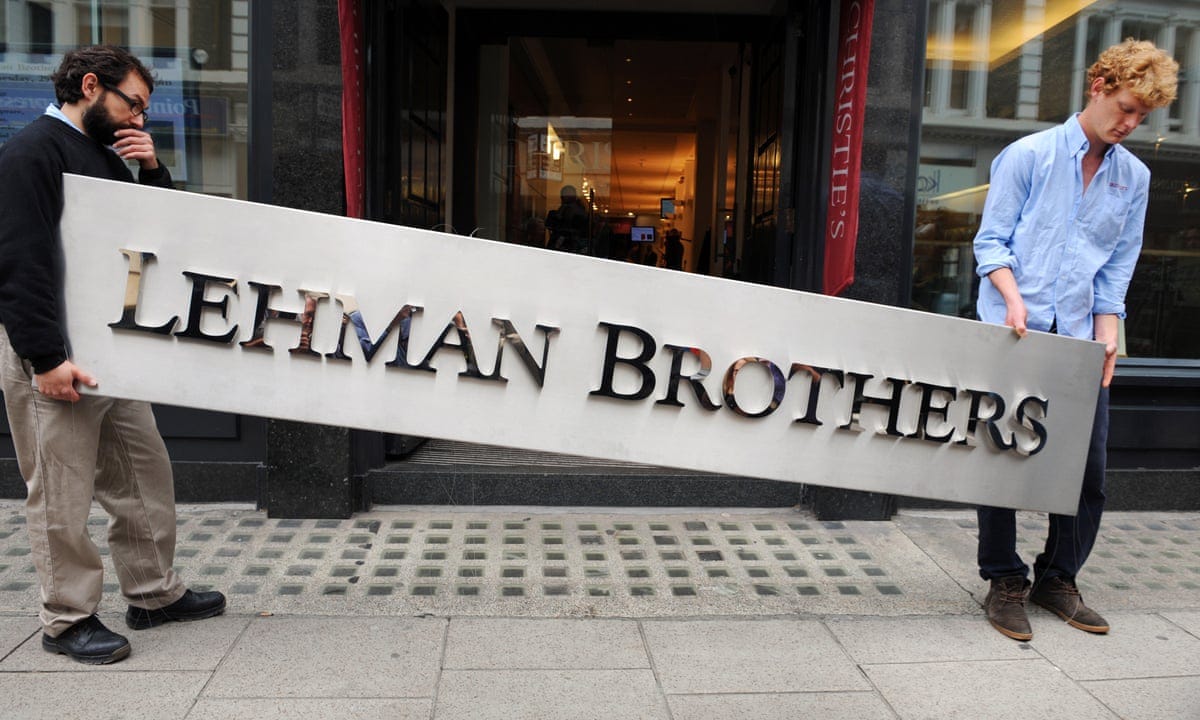
And then there’s the Lehman Brothers, oh boy.
They went into the 2008 crisis with leverage ratios reportedly over 30:1… This meant that debt massive exceeded their equity. This, as many of you know, resulted in the downfall of the Lehman Brothers.
4. Management Must Be Skilled Capital Allocators

The fourth thing to look for is a management team with a drive for excellent capital allocation.
As a shareholder, the management team is your company's employees, and they should be very successful at their job. An excellent management team has to invest the business’s money effectively and reward shareholders who have a long-term time horizon as owners of the business.
A useful ratio to measure management skill is called the return on invested capital, or ROIC. ROIC can be calculated in a few different ways, but I like to calculate it as the cash the business produces for owners divided by the long-term debt plus shareholders’ equity. Cash flow for owners is calculated from the cash flow statement and is basically operating cash flow subtracted by the capital expenditures needed to run the business. If a business produces $100.000 of cash flow for owners a year and they have $200.000 of long-term debt and $800.000 in shareholders’ equity, the ROIC would be 10%.
ROIC measures how well management invests money for the owners of a business. If a company is not paying all the cash they produce as dividends, this number tells you how well management is doing without giving the money to you. I look for businesses with a consistent 15% ROIC or more for many years. Basically, you want this number to be as large as possible. Especially above the Weighted Average Cost of Capital (WACC)
If the company has a high ROIC, it is best to let a company invest your cash flow for owners instead of paying a dividend. This way, as a shareholder, you don’t have to pay taxes on the dividends and can let your business’s cash flow grow internally. Businesses with a high ROIC for many years likely show that the management is very skillful as investors and works hard for the long-term shareholders.
The goal of finding great investments is to look for businesses with low debt and high returns on the cash produced by the business.
A prime example is Apple.
It produced an ROIC well above 20-30% in most years. It doesn’t just have profits, but it reinvests capital into buybacks, R&D, and supply chains extremely efficiently.
But old-line telecom and airline businesses usually boasted low returns on capital or even negative. These are capital intensive and often do not earn back what they invest.
5. Skin in the Game Or It’s Just a Job

The final thing is to make sure management has skin in the game.
What good is management if their goals are not aligned with the shareholders of a company? If management is only paid a salary and nothing more, what would motivate them to improve the business and increase returns to shareholders through dividends or rising stock prices?
The management team has to be owners of the business too.
It is best when a significant portion of their compensation is in stock awards. For example, in 2019 Intel CEO Robert Swan was given a base salary of $1.3M. He was also awarded a staggering $61M in stock awards. Do you think that his values are aligned with shareholders? Of course they are.
The best type of skin-in-the-game management can have is when they are the founders of the company. Many founders of a company would rather lose absolutely everything in life before their own business dies. This puts their goals directly in line with the shareholders of the business. For example, Elon Musk has about %50+ of his net worth in Tesla stock. I think this says enough about whether or not he has skin in the game.
The key takeaway is to always look for businesses where the management’s goals are aligned with yours as a shareholder. If the people running the company don’t care about the quality of the business, who will?
Jeff Bezons at Amazon, Mark Zuckerberg at Meta, and Elon Musk at Tesla and SpaceX all hold (held) enormous personal stakes in the businesses. Their net worth moves directly with the stock, so their inventives are hard to seprate from those of shareholders of their companies.
What trait would you add to the list? Drop your thoughts in the comments.
6. Management Makes (or Breaks) the Investment
I like to see management as one of the most important components of a successful investment. If a company's management has these five traits, the investor can sleep easy at night knowing the best people are running the company for them.
Even an outstanding business can become a terrible one with bad management. Think of a wonderful company in the past that made a series of bad acquisitions and decisions that cost shareholders a lot of money.
Of course, Warren Buffett’s own words say it best: “When we own portions of outstanding businesses with outstanding managements, our favorite holding period is forever.”
See you next time!
And remember, great investments don’t shout. They compound quietly.
—Yorrin
Note: I would love to hear from you!
If you want to share your thoughts or suggestions about FluentInQuality, or if there are any specific topics you’d like me to cover, just send an email to fluentinquality@gmail.com
Any other questions? Shoot me an email.
Don’t worry! I’ll never share your information.
Disclaimer
By having read this content, you acknowledge and accept the terms of the disclaimer that you can read here.