
11 High-Quality Stocks Getting Left Behind in This Rally. And Why That Is the Opportunity.
The S&P 500 is up 7%. The QQQ is up 14%. But most of those gains are coming from a handful of companies. Here is where the real value is hiding right now.
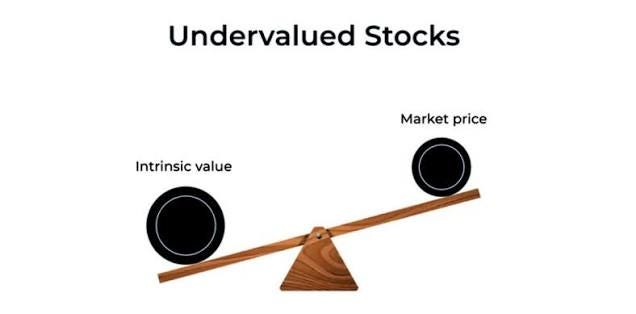
Here is something the market headlines are not telling you.
When you see the S&P 500 up 7% and the Nasdaq up 14%, it is easy to assume the entire market is running. That everything has had its moment. That the good deals are gone and you missed them. That is not what is actually happening.
The gains in this rally are being driven by a small cluster of semiconductor and AI companies. Most stocks outside that narrow group are flat or down. Which means right now, quietly, while everyone is chasing the same names, a collection of genuinely excellent businesses are sitting at attractive valuations that would have been almost impossible to find twelve months ago.
Here are eleven of them.
1. S&P Global ($SPGI)
Down 26% from its highs. Sitting at the bottom of its 52-week range. When you look at the five-year historical valuation range, the picture is even clearer: on both a price-to-earnings and a price-to-free cash flow basis, S&P Global is at the cheapest level it has traded at over the past half-decade. Not near the bottom. At the very bottom.
The forward PE sits at approximately 21. For context, that is a number you almost never see on a business of this quality. S&P Global is one of the most structurally protected businesses in financial markets. Its ratings business and its data and analytics businesses are deeply embedded in the global financial system in ways that create switching costs that most technology companies would envy.
The market’s concern is the Market Intelligence division, which some investors believe faces disruption from AI tools capable of replicating certain data and research functions. That concern may have some validity at the margin. But here is the revealing arithmetic: even if you assume that the entire Market Intelligence division contributes nothing, even if you zero it out completely and value the rest of the business on its own, the remaining earnings still justify a valuation of around 25 to 26 times forward earnings. The disruption risk has been priced in, and then the market kept selling anyway.
Meanwhile, the business fundamentals have continued to be strong. This is not a company that is reporting deteriorating numbers. It is a company being marked down because of a fear that has not materialized in the actual financial results.
Rating: Buy.
2. Mastercard ($MA)
Down 18% from its highs. At the low end of its 52-week range. At the very bottom of its five-year historical valuation on both a trailing price-to-earnings basis and a trailing free cash flow yield basis. By the numbers, Mastercard is as cheap as it has been in five years.
The most recent earnings report was strong. Revenue is growing. Earnings per share are growing in the high teens. The company is issuing more cards globally, expanding its network reach, and continuing to demonstrate the kind of market share dominance that makes Mastercard one of the most competitively protected businesses in the world.
Think about what Mastercard actually is: a toll booth on global commerce. Every time a Mastercard is used anywhere on earth, Mastercard takes a small fee. The more commerce happens globally, the more toll booths earn. It does not take credit risk. It does not lend money. It processes transactions and clips a small percentage of an enormous and growing number of them.
That business model does not deteriorate easily. Yet here it sits at a five-year valuation low while the business keeps executing. The gap between what the company is doing fundamentally and what the stock price is doing is exactly the kind of setup long-term investors look for.
Rating: Buy.
3. Texas Roadhouse ($TXRH)
Down 15% from its highs. Towards the middle of its 52-week range. Trading in the middle of its historical valuation range on both price-to-earnings and price-to-free cash flow. The setup is reasonable without being exceptional, but the business dynamics make this one compelling at current levels.
A few things are worth understanding about the current Texas Roadhouse situation. First, beef prices. Beef is Texas Roadhouse’s primary input cost, and beef prices have been elevated. But cattle lot sizes are growing, which means the beef supply is increasing, which means prices are expected to come down. When your biggest cost is falling and your revenue is growing, the margin picture improves.
Second, organic growth. Texas Roadhouse continues to open new restaurants and is doing so profitably. This is not a chain scraping for relevance. It is a brand that people genuinely love, which creates both the demand for new locations and the pricing power to maintain margins as those locations open.
The moat here is not technology or patents. It is the fact that people have an emotional connection to the brand and the experience. That is harder to replicate than most investors appreciate.
Rating: Buy.
4. Microsoft ($MSFT)
Down 27% from its highs. That is a significant drawdown for a company of this scale, well beyond the 15-20% pullbacks more typical of mega-cap technology names. It sits near the bottom end of its 52-week range. On a five-year historical price-to-earnings basis, it is at the very bottom of its range. The free cash flow yield tells a different story, sitting more in the middle, because Microsoft is deploying so much capital expenditure that current cash flow does not reflect the earnings power of the underlying business.
This is where the capital expenditure debate matters. If you believe the hyperscaler AI buildout across Microsoft, Google, Meta, and Amazon is a bubble, that returns will be poor, and that they are overbuilding capacity into a market that will not materialize, then these companies are not for you. That is a legitimate view, and it deserves honest consideration.
But here is the counterargument. These four companies have something that pure AI startups do not: they have existing businesses with billions of customers and hundreds of existing products that they can improve with AI immediately. Microsoft has Office, Azure, Teams, GitHub, and dozens of Fortune 500 tools. Every one of those products gets better with AI integration. The return on the infrastructure spend does not have to come from a new product category. It can come from making the existing business work better, which is a much lower bar.
When you layer that on top of a stock that is 27% off its highs and sitting at the cheapest earnings multiple it has traded at in five years, the risk-reward starts to look genuinely attractive.
Rating: Buy.
5. Moody’s ($MCO)
Down 17% from its highs. In the middle of its 52-week range. Undervalued on both historical price-to-earnings and price-to-free cash flow relative to its own five-year history.
Moody’s occupies the same essential position in global credit markets that S&P Global does. Its ratings are embedded in bond covenants, regulatory requirements, and institutional investment mandates all over the world. If Moody’s downgrades your debt, your cost of borrowing increases. If Moody’s rates a new bond issuance, institutional investors can buy it. That is not a discretionary service. It is plumbing.
The AI disruption concern that follows S&P Global also follows Moody’s, but the data and analytics services that both companies provide are not obviously replicable by a generic large language model. The specific, structured, regulated, and legally significant nature of credit ratings makes them far more defensible than most data products. The market appears to be pricing in disruption risk that has not shown up in the fundamentals.
Rating: Buy.
Five down. Six to go.
The next six are the ones I’d prioritize.
Highest conviction. Most overlooked. Best entry points right now.
→ Join Fluent Few Premium — €25/month or €275/year
First 14 days on me. No questions asked.
